Tracing Financial Inputs to Allocated Time Slots in Recreational Athletic Organizations
Dana Becker · Aug 7, 2026
Tracing Financial Inputs to Allocated Time Slots in Recreational Athletic Organizations
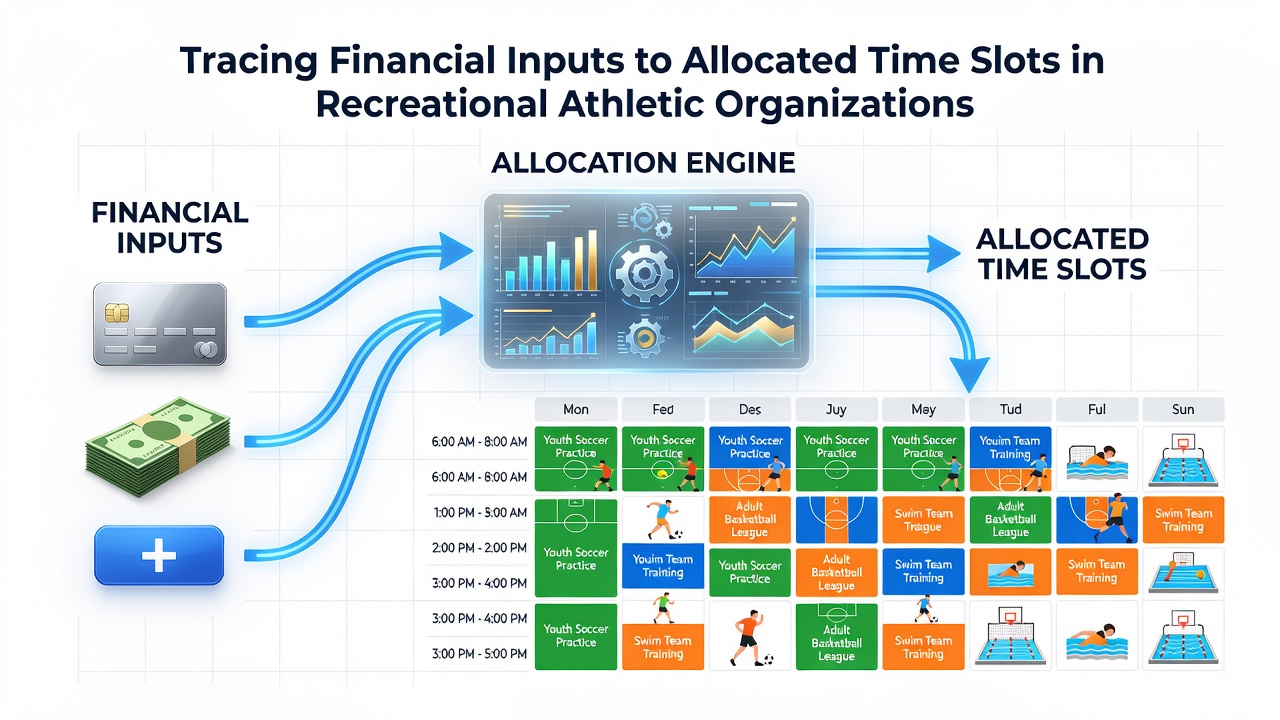
Recreational athletic organizations manage the flow of registration fees, sponsorship dollars, and grant funding into specific court or field bookings through structured accounting systems that link each payment directly to available time slots, and data from multiple regional programs shows these connections shape weekly schedules across community centers.
Payment Processing and Slot Assignment Mechanisms
Organizations collect fees at the point of team or individual enrollment, then route those amounts through dedicated ledgers that flag priority access once thresholds are met, while separate revenue streams from local businesses or government allocations supplement the base pool and allow additional slots to open during peak periods. Researchers at several municipal recreation departments have documented how a single registration payment triggers an automated or manual entry in the facility calendar, creating a traceable path from the payer's account to the exact hours reserved on a given court or pitch.
Payment gateways integrated with league software record timestamps and amounts, after which administrators cross-reference the totals against remaining inventory of time slots, and this process repeats across dozens of teams each season. In practice, organizations maintain separate accounts for core fees versus supplemental grants, which permits auditors to verify that a particular block of evening hours was funded by participant contributions rather than external sources.
Regional Funding Models and Their Effects on Scheduling
Programs in North America often rely on tiered pricing structures where higher payments secure preferred evening or weekend slots, whereas European counterparts frequently blend public subsidies with modest user fees to distribute access more evenly across morning and afternoon periods. A 2025 report issued by the Australian Sports Commission highlighted how targeted infrastructure grants in regional Victoria expanded available hours at multi-use venues, directly increasing the number of allocated slots for junior leagues without raising individual registration costs.
Observers note that these models create measurable differences in utilization rates, with facilities that separate payment sources showing clearer audit trails when time slots shift due to weather cancellations or maintenance. In August 2026, several Canadian provincial associations plan to roll out updated digital platforms that embed real-time financial tracking into the scheduling interface, allowing organizers to see instantly which revenue category supports each new booking.
Data Integration Across Multiple Organizations
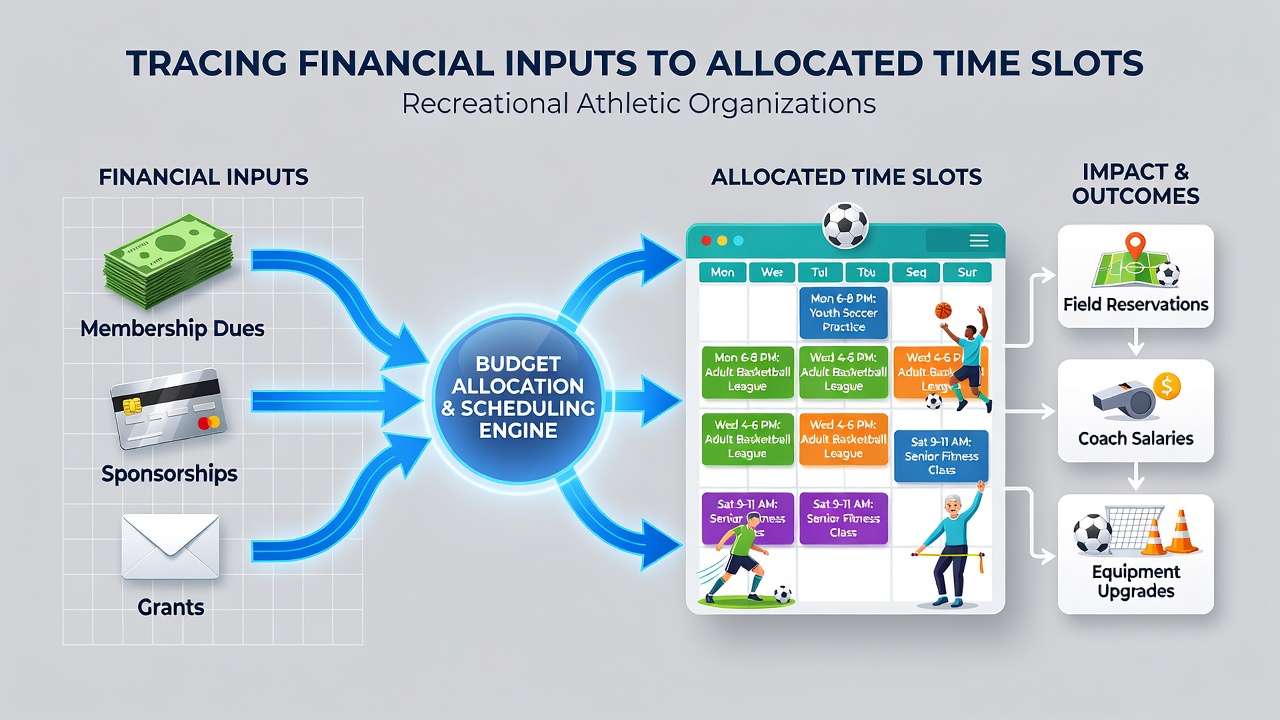
Shared databases now connect player registration systems with venue calendars in many metropolitan areas, enabling administrators to trace a single sponsorship check to an entire block of tournament hours spread across three different sites. Industry analyses from the National Recreation and Park Association indicate that such integration reduces scheduling conflicts by allowing real-time adjustments when payments clear or fall short.
Case studies from mid-sized cities reveal that organizations using unified platforms can reallocate underused morning slots to groups whose fees arrived later in the enrollment window, preserving overall revenue while maximizing facility uptime. Those who have examined the resulting reports find that the linkage between financial inputs and time allocations becomes most visible during end-of-season reconciliations, when unused hours are credited back to specific funding streams.
Challenges in Maintaining Transparent Linkages
Variations in software adoption and manual override practices sometimes obscure the direct path from payment to slot, particularly when volunteer coordinators adjust schedules on short notice without updating the central ledger. Government oversight bodies in several jurisdictions have begun requiring annual disclosures that map revenue categories to actual facility hours used, which has prompted organizations to tighten internal controls and adopt standardized reporting formats.
Training sessions for new staff now emphasize the importance of logging every adjustment with its corresponding financial justification, and this practice helps preserve the integrity of the tracing process even when last-minute changes occur. Data collected through these enhanced protocols shows fewer discrepancies between budgeted and actual slot usage in organizations that enforce consistent entry procedures.
Conclusion
The mechanisms that connect financial inputs to allocated time slots continue to evolve as organizations adopt more integrated digital tools and respond to shifting public funding priorities. Clear documentation practices allow stakeholders to follow each dollar from receipt through to the specific hours it supports on community courts and fields, and upcoming platform updates scheduled for 2026 are expected to strengthen these connections further across recreational athletic networks.