Contact Cascades Linking Player Records to Facility Timelines in Multi-League Pay Structures
Devon Schwarz · Aug 12, 2026
Contact Cascades Linking Player Records to Facility Timelines in Multi-League Pay Structures
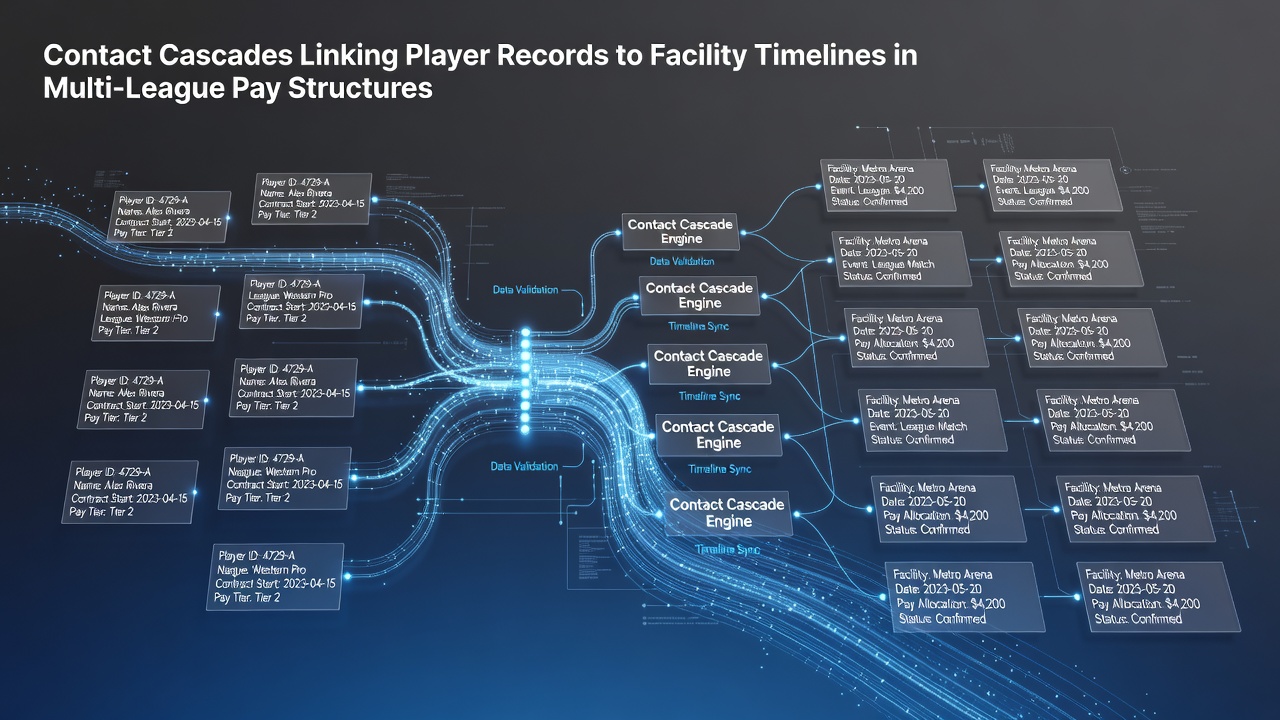
Player registration data moves through interconnected systems in multi-league pay structures, where contact details and payment histories trigger adjustments in facility availability and match schedules. These cascades begin at enrollment points and extend outward as updates propagate across shared databases used by overlapping competitions.
Registration Triggers and Initial Data Flows
Entry forms capture names, phone numbers, email addresses, and fee payment confirmations that feed directly into league management platforms. When a participant completes payment for one circuit, the system records the transaction and flags associated contact fields for cross-league verification. Observers note that these fields then link to venue calendars maintained by facility operators who serve several leagues simultaneously.
Updates to a single record, such as a changed mobile number or revised availability window, generate alerts that cascade to coordinators responsible for court bookings and field allocations. According to reports from the National Recreation and Park Association, these alerts reduce double-booking incidents by routing revised timelines to all connected parties within hours of the change.
Multi-League Overlaps and Payment Structures
Pay structures vary across leagues, with some charging flat seasonal fees while others invoice per session or per match. Each model stores distinct financial timestamps that influence when facilities release or reserve slots. A player who pays an upfront fee in one league may receive priority access flags that automatically adjust timelines in a second league sharing the same venue pool.
Researchers tracking these patterns found that contact information serves as the common key across disparate payment ledgers. When a participant settles an outstanding balance in League A, the confirmation travels through shared contact fields to League B, prompting rescheduling of practice times that had been held pending payment clearance. This linkage keeps facility calendars synchronized without requiring manual intervention from each organizer.
Facility Timeline Adjustments in Practice
Coordinators at community centers and municipal complexes rely on these data streams to reallocate courts and fields when player counts fluctuate. In August 2026 several regional networks implemented automated cascade protocols that pushed updated rosters to venue systems at midnight each Sunday, allowing Monday morning adjustments to start times and duration slots. The result appears in reduced idle periods for high-demand spaces and fewer last-minute cancellations announced to participants.
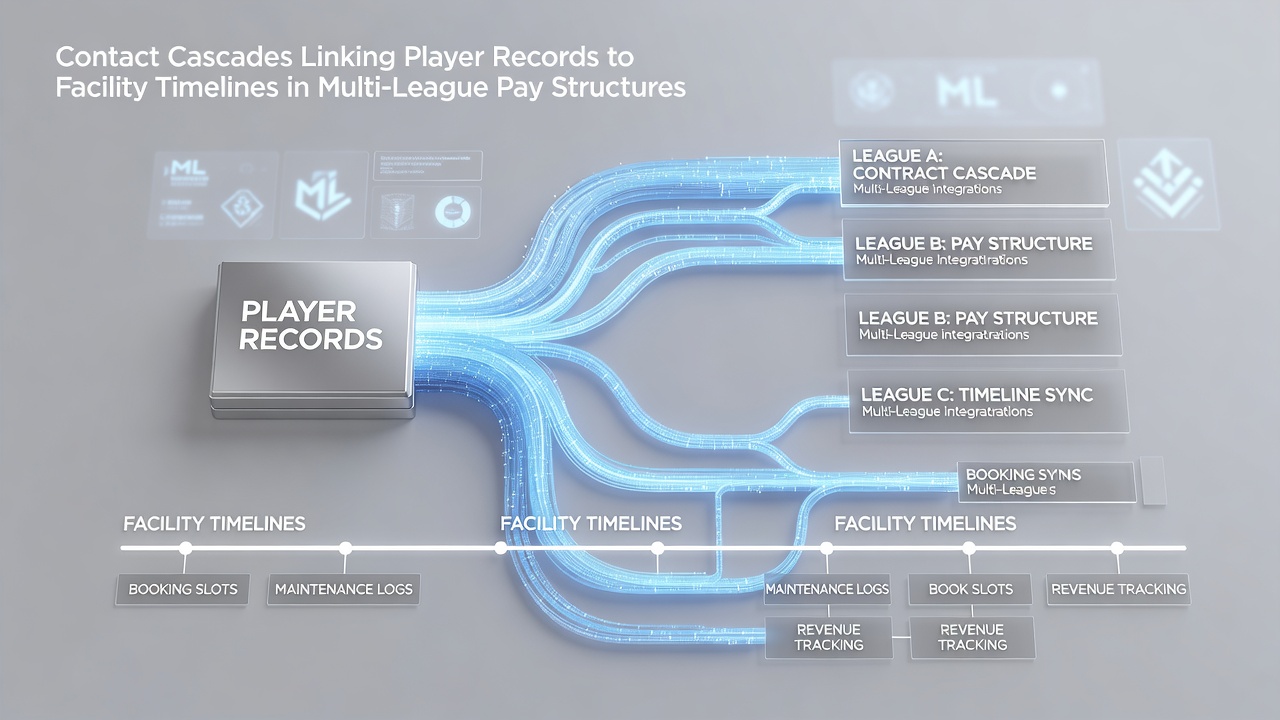
Case examples from Canadian provincial sport organizations illustrate how a single contact edit can ripple outward. One documented instance involved a roster change that altered headcount projections, which in turn shifted required staffing levels at two separate facilities and prompted a cascade of revised rental invoices sent to the affected leagues.
Communication Networks and Resource Allocation
League administrators maintain contact directories that double as distribution lists for schedule bulletins. When facility operators issue availability notices, those messages travel through the same contact nodes back to players and team captains. This closed loop ensures that payment confirmations and timeline modifications stay aligned across all participating groups.
Data from Sport New Zealand indicates that organizations using unified contact platforms experienced a measurable decrease in scheduling conflicts during overlapping seasons. The platforms route information along established pathways rather than relying on individual emails or phone calls, which reduces the lag between a payment update and the corresponding facility adjustment.
Conclusion
Contact cascades continue to shape how player records influence facility timelines within multi-league pay structures. The connections formed through shared data fields allow payment events and roster modifications to propagate efficiently, keeping venue allocations responsive to real-time conditions across overlapping competitions.