Butterfly Bookings: How Minor Registration Shifts Cascade Into Major Schedule Changes Across Shared Sports Facilities
Felix Bennett · Aug 21, 2026

Butterfly Bookings: How Minor Registration Shifts Cascade Into Major Schedule Changes Across Shared Sports Facilities
Shared sports facilities operate as tightly linked networks where a single registration update for a youth team can trigger adjustments across dozens of time slots, and data from facility management platforms show these patterns repeating throughout the year. Registration systems track participant counts, age groups, and skill levels while feeding information directly into booking software that allocates courts, fields, adn pools among overlapping leagues, clubs, and school programs. When a minor change occurs such as two additional players joining a roster or one family withdrawing from a session, the system recalculates required space and coaching ratios before redistributing available hours.
Registration Inputs and Initial Ripple Effects
Facility operators collect registration data through centralized portals that record exact numbers of participants along with their age categories and preferred time preferences, and these inputs determine baseline court allocations for each week. A shift of three players moving from one age bracket to another requires coaches to request different court dimensions or additional equipment setups, and the booking software automatically flags conflicts with neighboring groups that had already claimed adjacent time blocks. In August 2026 several multi-use centers reported that early registration adjustments for fall youth programs altered more than forty percent of evening slots originally assigned in July, according to records maintained by regional recreation departments.
Those adjustments often extend beyond the immediate group because shared venues maintain strict ratios for supervision and safety equipment, so adding or removing even a handful of minors forces recalculation of staffing needs and insurance coverage across the entire daily schedule. Observers note that smaller facilities experience faster propagation of changes because fewer total hours exist to absorb the displacement, whereas larger complexes can sometimes reroute affected teams to underutilized areas without immediate visible disruption.
Facility Coordination Across Multiple Leagues
Multi-league athletic networks rely on shared calendars that update in real time when any participating organization modifies its roster data, and this connectivity means a registration correction submitted on a Tuesday morning can appear as revised court assignments by Wednesday afternoon. Research from facility operations studies indicates that venues hosting both recreational and competitive programs encounter the strongest cascade effects because competitive squads require dedicated warm-up periods and post-match analysis time that recreational groups do not always need. When one league reports a sudden increase in registered minors, schedulers must locate equivalent space for the displaced sessions while preserving fairness across all user groups.
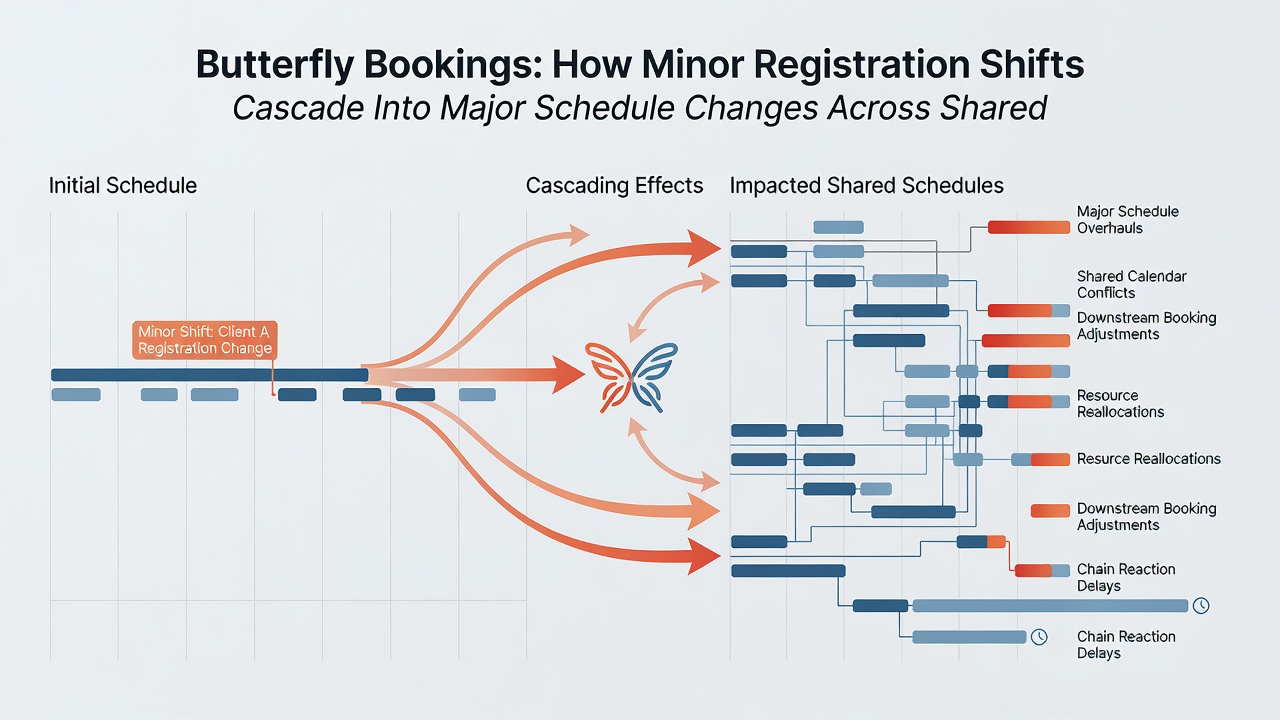
Coordinators at community centers in several regions describe the process as a chain of sequential reallocations where each confirmed change prompts phone calls or automated messages to neighboring teams, and those teams in turn check their own availability before confirming new slots. Data collected by the National Recreation and Park Association shows that facilities averaging more than twelve user groups per week experience an average of 2.3 secondary schedule modifications for every primary registration adjustment logged in the system. Such patterns hold steady across indoor and outdoor venues, although outdoor fields introduce additional variables such as weather-related closures that can amplify the impact of any single roster shift.
Technology Systems Driving Schedule Propagation
Modern booking platforms integrate registration databases directly with calendar modules so that any edit to participant counts immediately recalculates available capacity and surfaces conflicts for human review, and these automated links reduce manual errors while accelerating the speed at which changes spread. Industry reports compiled by Sport and Recreation Victoria highlight cases where a single age-group transfer in one league produced seven downstream adjustments across three different facilities within forty-eight hours. The systems also track historical usage patterns, allowing managers to predict which time blocks possess the greatest flexibility when sudden registration fluctuations occur.
Operators note that integration between player management software and facility access controls further tightens these connections because entry permissions update automatically once schedules shift, and any mismatch between registered players and assigned courts triggers alerts that require prompt resolution. This level of connectivity proves especially relevant during peak periods such as the transition from summer camps into fall leagues, when many families finalize multiple registrations within the same week.
Conclusion
Registration changes in youth sports programs continue to demonstrate measurable effects on shared facility timetables, with each minor adjustment propagating through interconnected booking systems and staff coordination processes. Facility records from multiple regions confirm that the scale of impact depends on the number of overlapping user groups, the degree of software integration, and the flexibility of available space at any given time. As registration platforms grow more sophisticated, the speed and reach of these schedule cascades are expected to remain consistent features of multi-use athletic environments.